
PRODUCTION PROCESS
From Sampling to Bulk Production: How the Process Works
A practical overview of how a custom bag project moves from specification and sampling through approval, production preparation, quality control and bulk manufacturing.
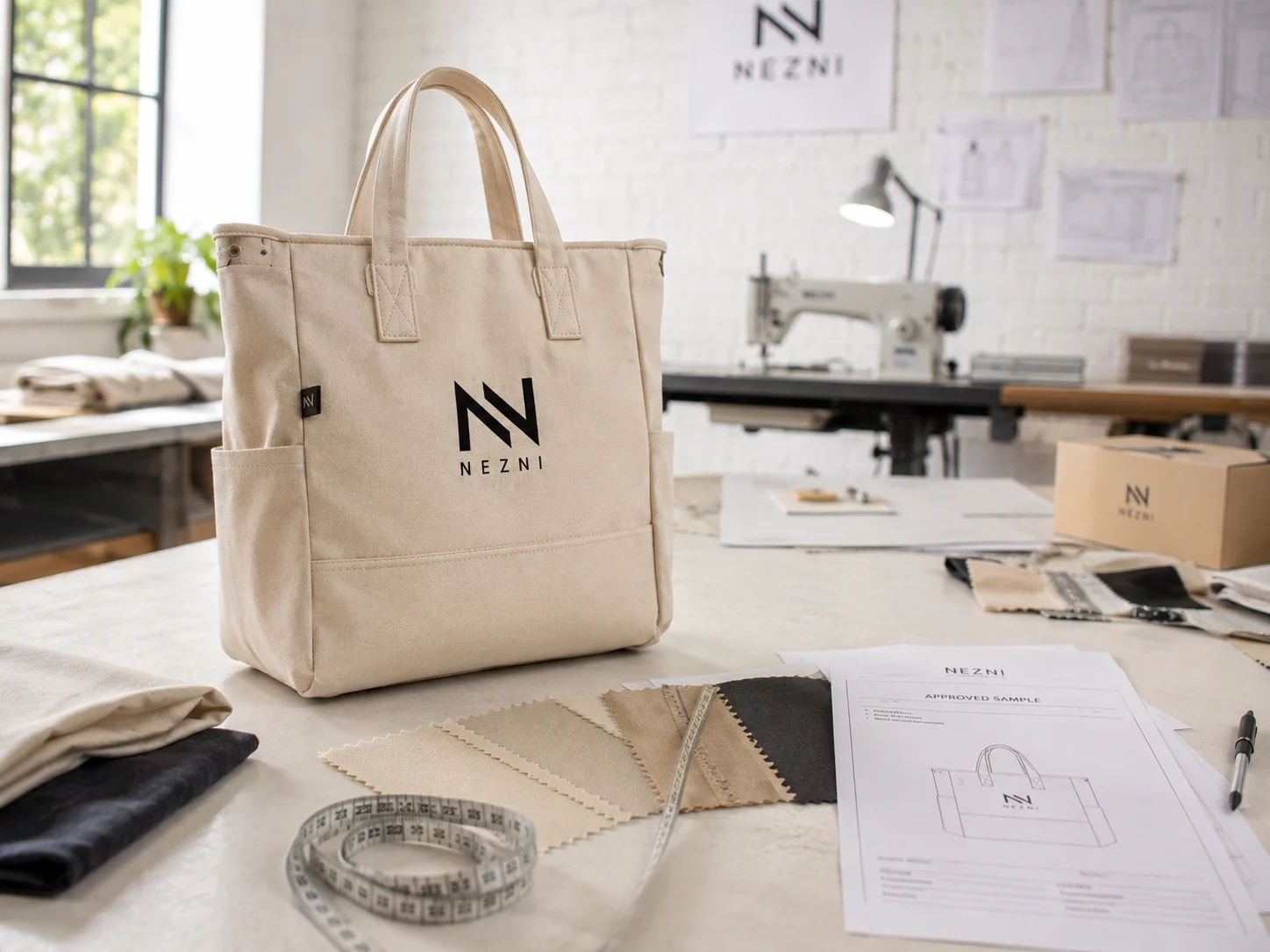
In custom bag manufacturing, an approved sample is not simply a visual preview. It is the working reference that connects the buyer’s specification with the production process that follows.
A project normally develops through several stages: the brief is reviewed, materials and construction are defined, a sample is produced, revisions are resolved, the final specification is approved and only then is the order prepared for bulk production.
Understanding this sequence helps B2B buyers plan realistic approvals, reduce avoidable changes and keep commercial, technical and branding decisions aligned before larger quantities are produced.
PROCESS OVERVIEW
Start with a Clear Production Brief
Sampling is most effective when the initial project brief is already reasonably clear. The manufacturer should understand the intended use, target dimensions, quantity, preferred materials, expected load, branding and any special construction requirements.
Not every detail has to be final at the beginning. Material alternatives, handle construction or finishing details may still need recommendation. The important point is to identify which parts of the project are fixed and which parts are still open to development.
This prevents the first sample from becoming an attempt to solve several unrelated decisions at once.
What the First Sample Should Confirm
The first sample is usually used to evaluate the product as a complete object rather than as separate specifications on paper. Dimensions that looked correct in a drawing may feel different once the bag is assembled. Handle length, gusset depth, pocket position and overall proportion can all be assessed more accurately in physical form.
Sampling Is a Decision Stage, Not Bulk Production
A sample is made to identify and resolve specification issues before the production quantity is committed. For this reason, buyers should review the sample systematically rather than focusing only on whether the bag “looks good”.
Feedback should be specific. Instead of saying that a handle feels wrong, indicate whether it should be longer, wider, positioned differently or reinforced. Instead of requesting a different material without context, explain whether the issue is stiffness, colour, surface, weight or print appearance.
Clear feedback makes the revision cycle more efficient and creates a stronger final reference for production.
What Should Be Approved Before Bulk Production?
Before the order moves forward, the buyer and manufacturer should have a shared understanding of the final product specification. Approval should cover the details that materially affect how the bag will be produced.
If a requested change affects cost, material use or production method, it should be resolved before the production specification is released.
PRODUCTION PREPARATION
Moving from an Approved Sample to Production
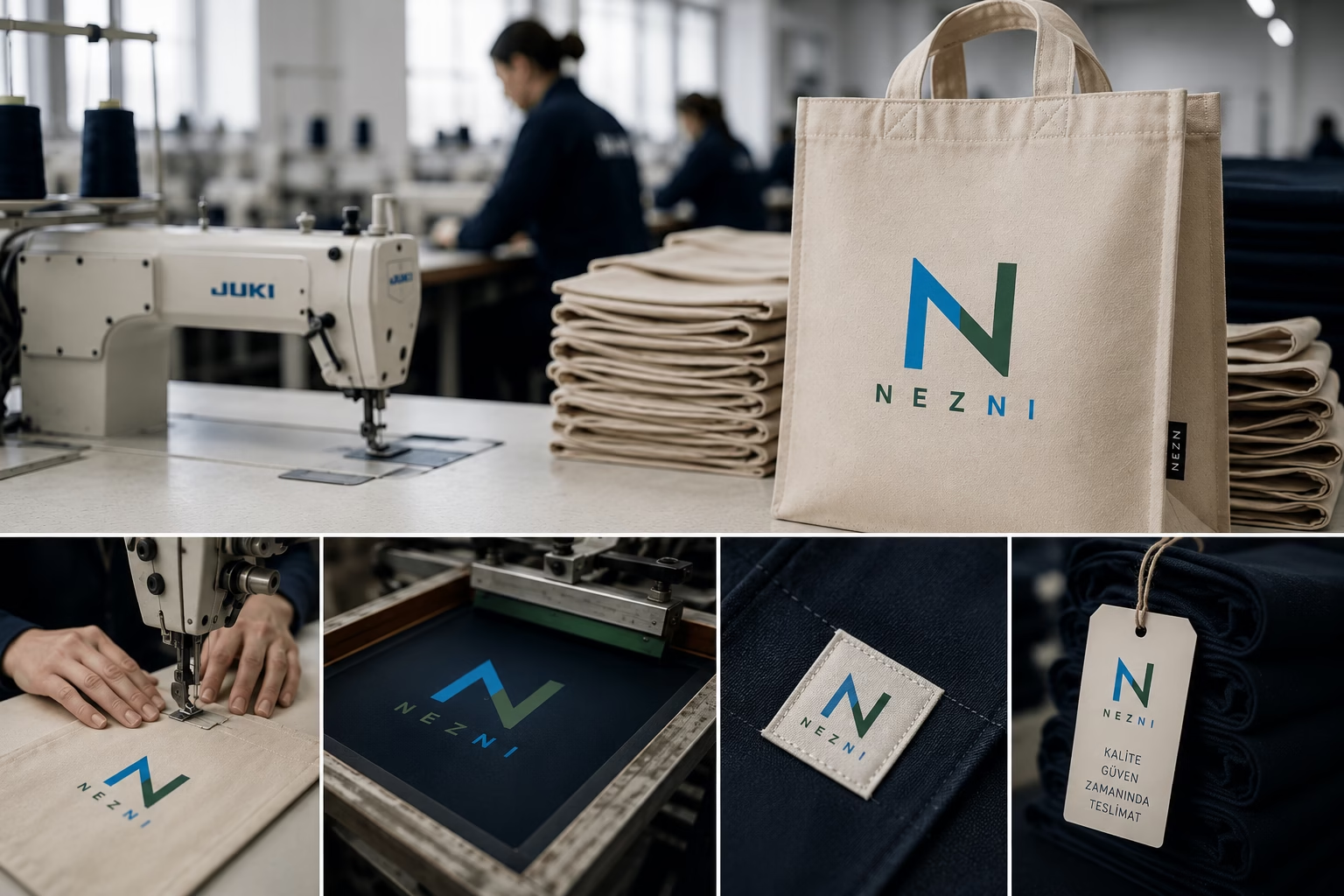
Once the final specification is approved, the project shifts from product development to production preparation. Materials, trims, artwork and construction details are coordinated around the approved reference.
Cutting, printing, sewing or heat-sealing requirements are prepared according to the agreed construction. At this stage, consistency matters more than experimentation: the objective is to reproduce the approved specification across the order quantity.
Production planning also takes the order volume, material availability, printing sequence, packing requirements and delivery coordination into account.
Why Late Changes Create Problems
Changes made after production preparation has started can affect more than one part of the order. A different handle length may require new cutting. A revised print size may affect screens or artwork setup. A material change can alter sewing behaviour, colour matching, lead time or cost.
This is why sample approval should be treated as a genuine decision point. It allows both sides to move into production using one agreed reference rather than an evolving specification.
Practical rule: if a detail is important enough to affect the finished product, it should be confirmed before bulk production begins.
Where a late change is unavoidable, its impact on production, timing and cost should be reviewed before implementation.
Bulk Production Is About Consistency
Once manufacturing begins, the goal is no longer to develop the design. The goal is to produce the approved design consistently across the order.
Depending on the bag type, this can involve material inspection, cutting, printing, sewing, heat sealing, component assembly, finishing and packing. Different products require different sequences, but each stage should work from the approved specification.
For B2B buyers, this distinction is important: a good sample shows what the product should be; production control is what helps maintain that result at scale.
Quality Control During Production
Quality control should focus on the characteristics that matter to the project rather than treating every bag as an abstract checklist. Dimensions, print placement, seam quality, handle attachment and finishing can all be relevant depending on the specification.
How Buyers Can Keep the Process Efficient
The most efficient projects usually have clear decision ownership. One approved artwork file, one agreed specification and consolidated sample feedback reduce the risk of conflicting instructions.
It is also helpful to separate essential changes from preferences. A dimension that prevents the bag from fitting its intended contents is a functional issue. A minor visual preference may not justify restarting a completed production step.
Keeping approvals organised is particularly important when agencies, brands, procurement teams and end clients are all involved in the same project.
Plan Timing Around Approval, Not Only Production
Buyers sometimes focus only on the manufacturing lead time, but a custom project also needs time for specification review, material decisions, sampling, feedback and final approval.
If a fixed delivery date exists, these pre-production stages should be included in the project plan. Delayed artwork, repeated sample changes or late specification decisions can reduce the time available for production even when manufacturing itself proceeds as planned.
From Sample to Bulk: The Key Principle
The purpose of sampling is to remove uncertainty before scale. The purpose of bulk production is to reproduce an approved specification consistently.
When the brief, sample feedback and approval process are handled carefully, the transition between these stages becomes much more predictable. This helps reduce unnecessary revisions, supports clearer quality expectations and gives both buyer and manufacturer a common production reference.