
MATERIAL COMPARISON
Nonwoven vs PP Woven Bags: Which Option Fits Your Project?
Nonwoven and PP woven bags can both work well for high-volume custom projects, but they differ significantly in structure, strength, printing, construction and expected reuse.
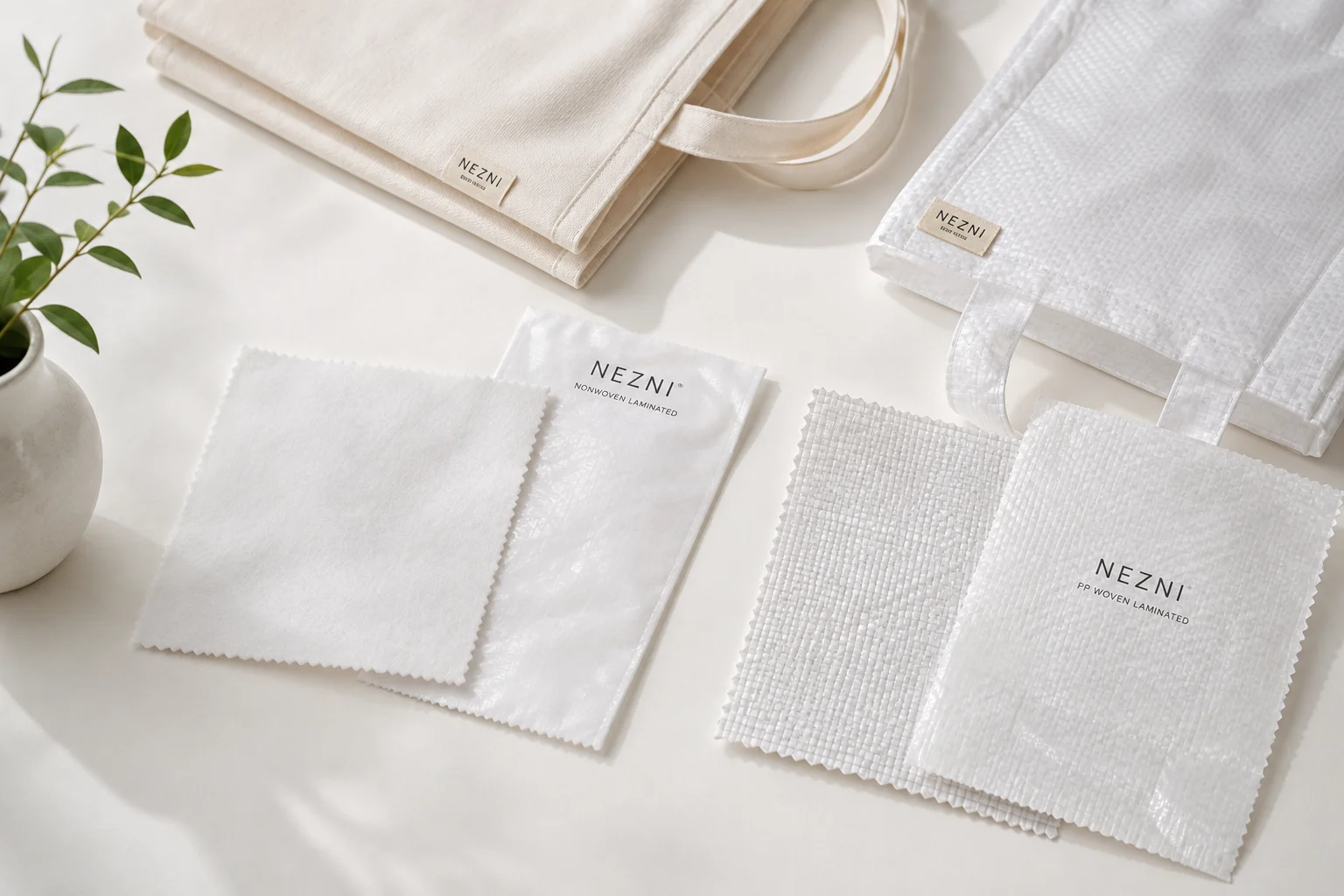
Nonwoven and PP woven bags are widely used for promotional campaigns, exhibitions, retail programmes and reusable shopping applications. Both are based on polypropylene, but the way the material is formed and the way the finished bag is constructed create very different products.
Nonwoven is generally lighter and more flexible. It is often selected when efficient production, broad colour choice and controlled unit cost are important. PP woven uses an interlaced polypropylene structure that creates greater strength and a more substantial feel, making it particularly suitable for reusable shopping and higher-capacity applications.
The correct choice depends on the full project specification. Quantity, intended load, printing, lamination, handle type, construction method and expected reuse should all be considered together rather than selecting a material by name alone.
QUICK COMPARISON
NONWOVEN
Lightweight and Efficient for High-Volume Projects
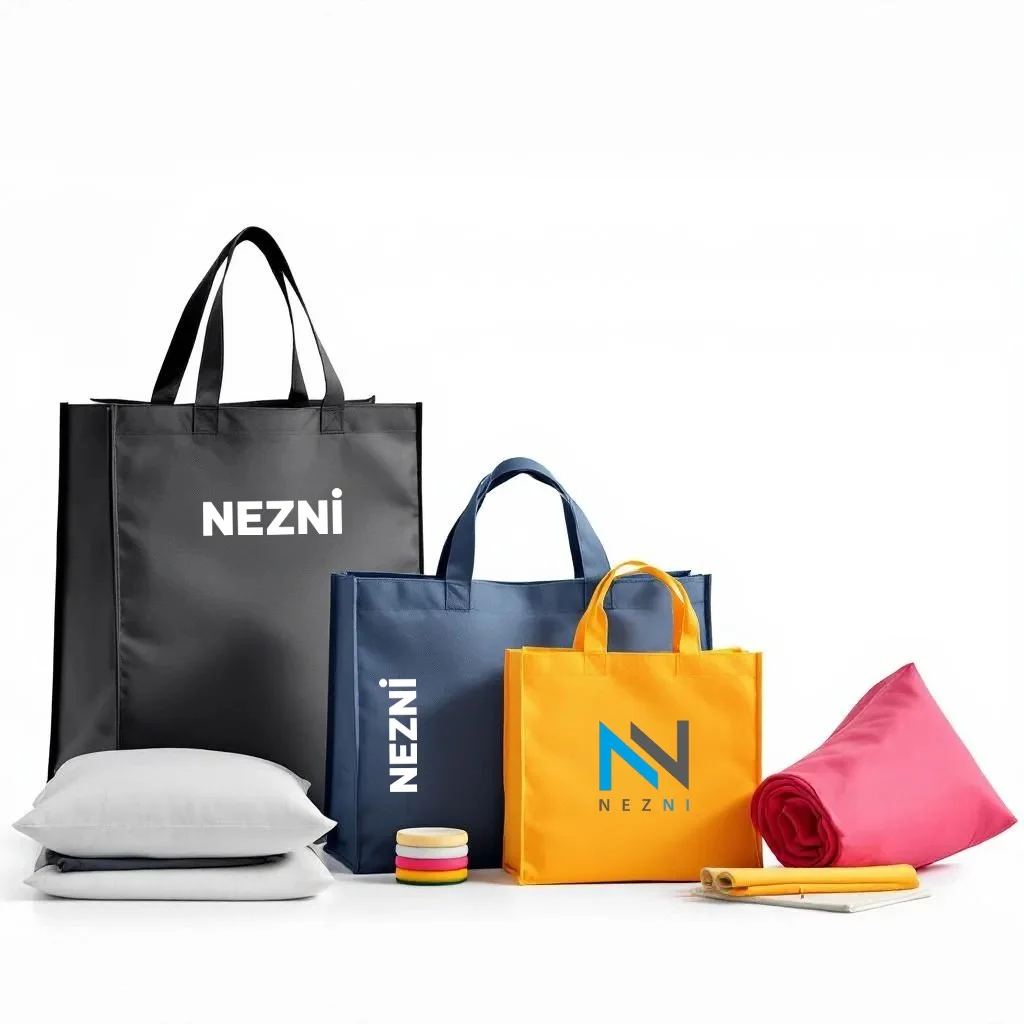
Nonwoven polypropylene is commonly used for promotional bags, exhibition bags, shopping bags and campaign programmes where a lightweight construction and efficient production are important.
The material is available in different weights and colours and can be used in both sewn and heat-sealed constructions. This flexibility allows buyers to choose between a more traditional stitched bag and a simpler high-volume heat-sealed format.
Nonwoven is especially useful when the bag needs to deliver branding visibility at scale without the additional structure or material weight of a woven shopping bag.
PP WOVEN
More Structure for Reusable Shopping Applications
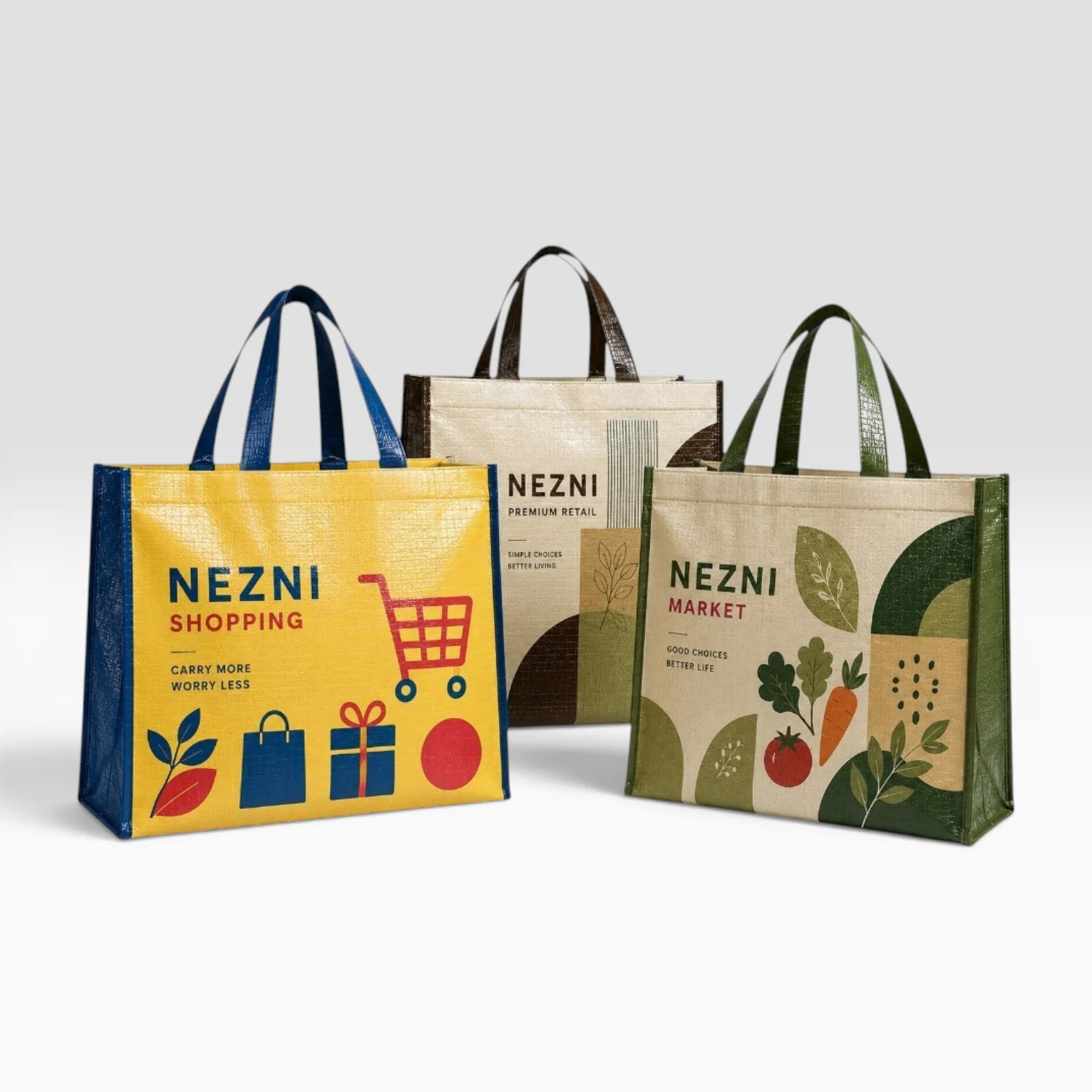
PP woven material is created from woven polypropylene strips, giving it greater tensile strength and structure than standard nonwoven material. This makes it suitable for larger reusable shopping bags and projects that need to carry more weight.
The woven base is commonly laminated to create a smoother printable surface. Large graphics, full-surface artwork, reinforced handles and generous gussets can be combined to create durable bags for supermarket, retail and distribution programmes.
Because PP woven bags generally use more substantial material and construction, they should be evaluated as a reusable product rather than simply as a heavier alternative to nonwoven.
Structure and Material Behaviour
The most fundamental difference is how the material itself is formed. Nonwoven polypropylene consists of fibres bonded together into a sheet-like material. PP woven is created by weaving polypropylene tapes into a structured base.
This difference affects the way the finished bag bends, carries weight and holds its shape. Nonwoven tends to feel softer and more flexible. PP woven normally feels firmer and more resistant to stretching under load.
For buyers, this means material selection should begin with the expected performance of the finished bag rather than with appearance alone.
Strength and Expected Load
A bag intended to carry brochures, lightweight promotional items or exhibition materials has different requirements from a reusable supermarket bag expected to carry groceries repeatedly.
Nonwoven can perform well for lightweight to moderate loads when the material weight, handle attachment and seam construction are correctly specified. PP woven is generally more suitable when higher load capacity, repeated use and stronger dimensional stability are priorities.
Handle design is particularly important in both materials. A stronger base material cannot compensate for weak handle attachment, so handle width, reinforcement and stitching should be reviewed as part of the complete specification.
Printing and Lamination
Standard nonwoven can be printed directly for straightforward logos and promotional artwork. Laminated nonwoven adds a smoother outer surface and can support more visually intensive graphics.
PP woven is also frequently laminated, especially for retail and shopping applications. The laminated surface can support large printed areas and high-impact branding while the woven base provides the strength required for repeated handling.
Buyers should confirm artwork coverage, colour expectations, laminate finish and panel construction during sampling. A printed proof on one material does not automatically predict the same result on another.
Construction Methods
Which Material Fits Promotional and Exhibition Projects?
For exhibitions, conferences, campaigns and short-term promotional programmes, nonwoven is often the more efficient option. It can provide a clean branded carrier while keeping material weight, packing volume and production complexity under control.
Sewn nonwoven may be preferred when the project requires a more finished appearance or stronger construction, while heat-sealed nonwoven can be effective for simpler designs and large quantities.
PP woven can still be used for promotional activity when the bag itself is intended to have longer-term value, but its additional structure may be unnecessary for lightweight contents or one-off events.
Which Material Fits Retail and Shopping Projects?
Reusable shopping programmes generally place more emphasis on load capacity, gusset size, handle strength and repeated use. PP woven is frequently a strong fit for these requirements because the woven base provides a more robust structure.
Laminated PP woven also offers a large printable surface, making it suitable for supermarket and retail branding where the bag acts as both packaging and a reusable advertising medium.
Nonwoven remains relevant for lighter retail applications, particularly when unit cost and efficient distribution are more important than maximum durability.
Nonwoven Project Priorities
Often suitable when lightweight construction and efficient volume production are central to the brief.
- Promotional campaigns
- Exhibitions and events
- Lightweight shopping use
- Large-volume distribution
PP Woven Project Priorities
Often suitable when higher capacity, repeated use and stronger retail presentation are required.
- Reusable shopping programmes
- Supermarket applications
- Higher carrying loads
- Large-area printed branding
Quantity and Cost Considerations
Nonwoven is often selected for cost-sensitive, high-volume programmes because lightweight material and simplified construction can support efficient production. Heat-sealed formats can further reduce sewing requirements where the bag design allows it.
PP woven typically represents a more substantial specification. The woven base, lamination, printing, sewing and reinforcement can increase production inputs, but the finished bag may also provide greater carrying performance and a longer usable life.
The correct commercial comparison should therefore be based on the expected use of the bag. A lower unit cost is not necessarily better value if the product is under-specified for the required load or reuse cycle.
Which Option Fits Your Project?
Choose nonwoven when the project prioritises lightweight construction, efficient high-volume production, promotional distribution or simpler shopping applications.
Choose PP woven when the bag needs greater strength, larger capacity, repeated use, reinforced construction or a laminated retail finish with extensive printed branding.
If both options appear suitable, compare actual samples using the expected load, bag dimensions, handle construction, artwork and target quantity. This provides a more reliable decision than comparing material names alone.
Build the Specification Around the End Use
A clear project brief helps determine whether nonwoven or PP woven is the stronger commercial fit. Include dimensions, estimated quantity, intended contents, expected carrying load, artwork requirements, preferred handle type and whether lamination is required.
The material, construction and branding method should then be evaluated as one complete product specification. This approach reduces unnecessary sampling changes and helps align the finished bag with both performance and budget expectations.