PRINTING & BRANDING
What B2B Buyers Should Know Before Ordering Custom Printed Bags
Printing is only one part of a successful custom bag project. Material, artwork, colour expectations, print area, construction and quantity all affect the final result.
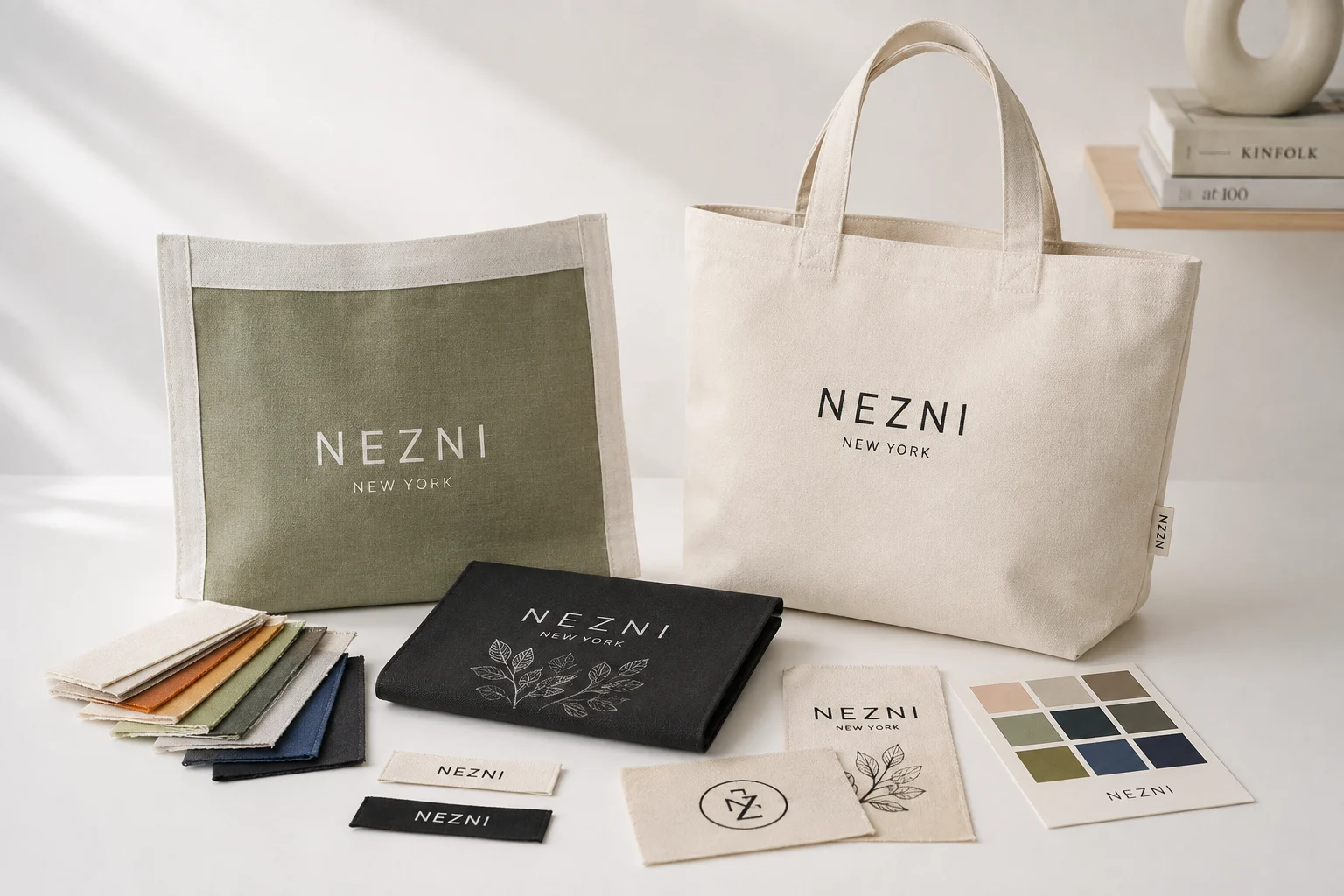
Custom printed bags are often ordered as part of a wider promotional, retail or corporate programme. The bag carries the brand visibly, but the quality of that branding depends on much more than sending a logo file to a manufacturer.
The material surface, fabric colour, print size, artwork complexity, number of colours, construction and order quantity can all influence which printing approach is suitable and how the finished design appears.
For B2B buyers, the most reliable approach is to define the bag and the branding together. Choosing the product first and discussing print only at the end can create unnecessary compromises during sampling.
BUYER CHECKPOINTS
Start with the Material, Not Only the Artwork
A logo does not print onto every material in the same way. Surface texture, weave density, material colour and absorbency can all change the appearance of the finished print.
A smooth, tightly woven textile can provide a different result from a coarse canvas. Standard nonwoven behaves differently from laminated nonwoven, and a laminated PP woven shopping bag offers a different printable surface again.
This is why material and branding should be evaluated together during the specification stage.
TEXTILE PRINTING
Printing on Cotton and Other Woven Fabrics
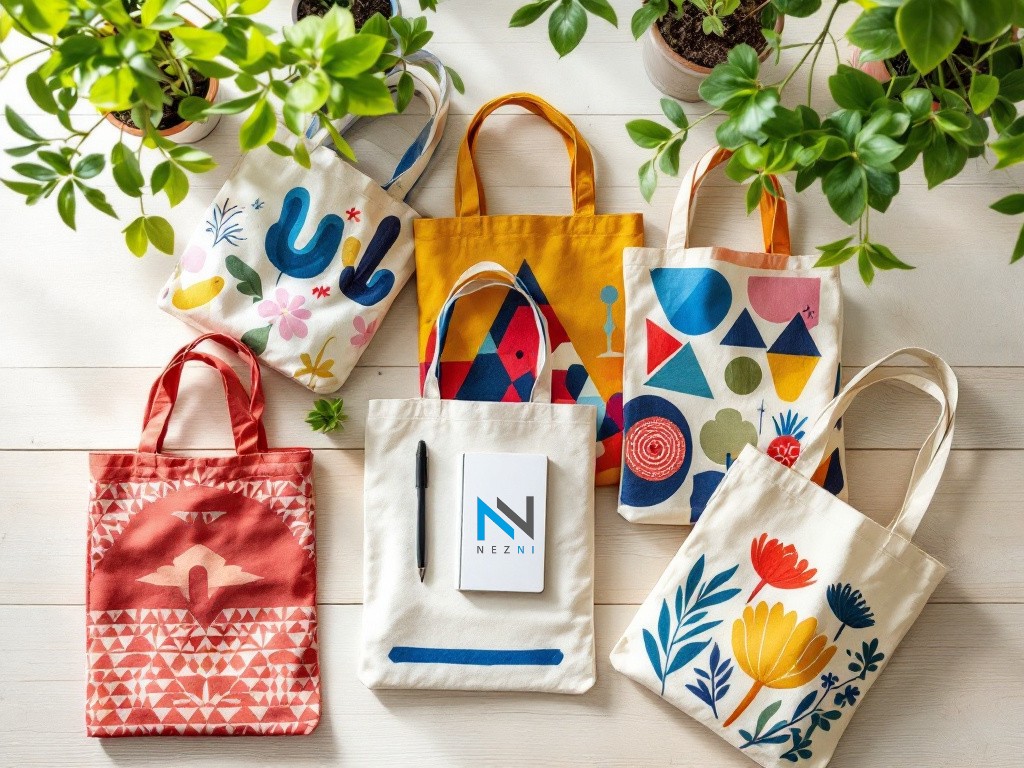
Cotton and canvas are popular for promotional and retail projects because they provide a recognisable textile surface and support a wide range of branding styles.
The fabric itself influences the print. Lighter cotton may have a softer surface, while heavier canvas can show more visible texture. Large solid areas, fine details and exact colour expectations should therefore be checked against the selected fabric rather than judged only from a digital artwork file.
Fabric colour also matters. Printing onto natural, black or strongly coloured material can produce different visual results, so artwork and base colour should be approved together.
FULL-SURFACE BRANDING
Lamination Changes the Printing Possibilities
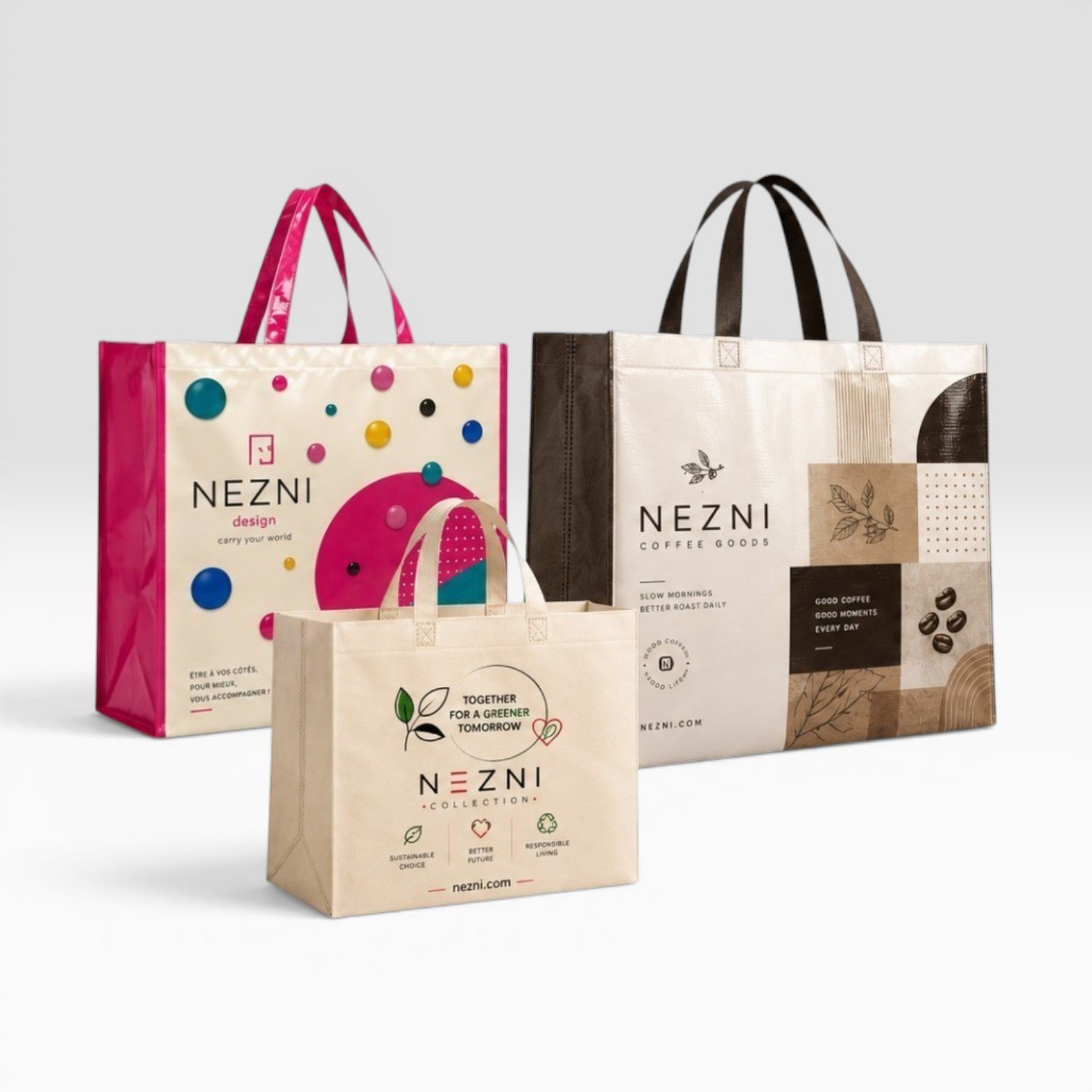
Laminated nonwoven and laminated PP woven bags can support larger and more visually intensive printed surfaces than many standard textile constructions.
The laminated outer layer can create a smoother surface for extensive graphics, photography, patterns or retail-style artwork. At the same time, laminate finish, panel layout and seam positions become part of the visual design.
Buyers planning large-area branding should therefore confirm the final bag dimensions and construction before artwork is locked. An artwork file prepared without regard to gussets, seams or folding can require unnecessary redesign later.
Define the Printable Area Early
The available print area is determined by the construction of the bag. Handles, seams, gussets, pockets, zippers and edge allowances can all reduce the usable branding area.
A design that looks balanced on a flat digital rectangle may appear too close to a seam once the product is assembled. For this reason, print placement should be developed on the actual bag dimensions rather than on a generic artwork template.
Artwork Quality Matters
Production artwork should normally be supplied in a format suitable for the selected printing process. Vector artwork is useful for logos, typography and clean graphic elements because it can be scaled without losing definition.
Raster images can also be used for some applications, particularly where photographic or detailed artwork is involved, but image resolution and final print size need to be appropriate.
The manufacturer should not have to guess which version of the logo, colour or layout is final. File naming and artwork approval become especially important when several stakeholders are involved.
Colour Expectations Should Be Realistic
Colours shown on a monitor do not provide a reliable physical production reference on their own. Screen brightness, display calibration, fabric colour and printing method can all affect how a colour appears.
If brand colour accuracy is commercially important, provide recognised colour references where possible and review the physical sample. The relationship between ink, base material and surface finish should be evaluated in the real product.
A print on natural cotton can appear different from the same colour on white laminated material even when the artwork is identical.
Large Print Coverage Can Change the Project
Printing a small logo and covering most of a bag panel are not equivalent production requirements. Large print areas can affect process choice, artwork preparation, colour control and the way material behaves during manufacturing.
Full-surface or near-full-surface designs should be discussed early, particularly for laminated products. The manufacturer may need to plan artwork around cutting lines, gussets and panel assembly before the final graphic files are prepared.
Printing and Construction Must Work Together
The bag is assembled from physical components, so artwork should not be treated independently from construction. A pocket can interrupt a print area. A handle attachment can overlap a graphic. A gusset can change the way a pattern aligns when the bag is opened.
For more complex products, branding should be reviewed alongside the technical drawing or approved sample so that the visual design works with the final construction.
Quantity Affects Printing Decisions
Order quantity can influence which production approach is commercially practical. Printing setup, artwork preparation, material purchasing and manufacturing efficiency are all evaluated in relation to volume.
Buyers should therefore provide a realistic estimated quantity when requesting a quotation. If several order volumes are under consideration, asking for structured quantity levels can make the commercial comparison clearer.
The lowest print cost should not be evaluated independently from the complete bag specification. A cheaper branding method may not deliver the required surface coverage, visual quality or material compatibility.
Use Sampling to Approve the Complete Result
A physical sample gives the buyer the opportunity to review material, construction and branding together. This is particularly valuable when exact print placement, colour, scale or surface appearance is important.
Sample feedback should be specific and consolidated. If the logo needs to move, define the new position. If the print feels too large, provide the revised dimensions. Clear instructions reduce the risk of unnecessary interpretation.
Before approving custom printed bags for bulk production, confirm three things together: the bag construction, the material surface and the final branding result.
Treating printing as part of the product specification — rather than as decoration added at the end — creates a more reliable path from artwork to finished bag.
What to Send with Your Custom Printed Bag Enquiry
A useful enquiry should give the manufacturer enough information to evaluate the bag and its branding without relying on assumptions.
If some details are still open, state that clearly. The manufacturer can then recommend suitable material, construction and branding options based on the project requirements rather than working from assumptions.